Our War, More Chips, Your Portfolio
Boom and Shock at the Same Time
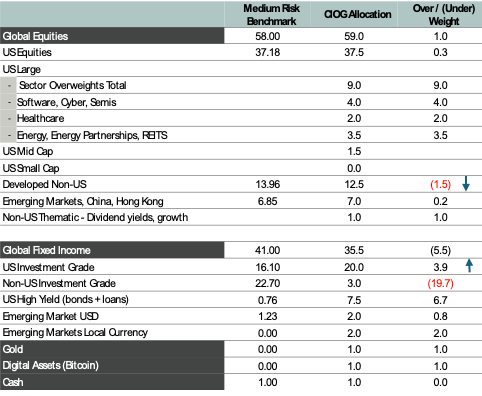
The US economy is experiencing a boom and a shock at the same time. That’s why CIO Group reduced its non-US equity weighting last week, reducing exposure in Europe, while keeping our bullish view of US tech. With signs that the conflict in the Middle East will extend, we reallocated a portion of our European and international shares to US energy producers and distributors (both common shares and Energy Limited Partnerships). We’ve also added to our position in short-duration inflation-protected debt -- short-term Treasuries with inflation compensation. (See our new asset allocation table at end of this article.)
Our War, Your Problem?
In 1971, US Treasury Secretary John Connally famously told a group of international finance ministers, "The dollar is our currency, but it's your problem." At the time, the US announced that it would no longer redeem US dollar assets for gold. Today, the President’s decision to strike Iran and Iran’s ability to decimate Persian Gulf trade is much more the rest of the world’s problem.
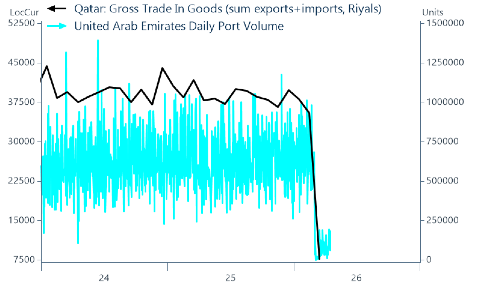
The risk of a deeper extended energy shock is increasing even as the “hot war” with Iran has paused. Europe and parts of Asia are deeply reliant on Persian Gulf oil and gas exports, little of which are flowing (Figure 1).
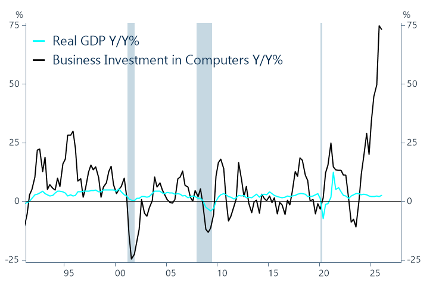
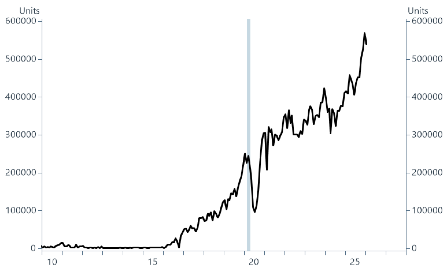
Meanwhile, the US reported 1Q real economic growth of 2.0% even with headline consumer prices soaring, dragging down consumer spirits. Powering that gain was booming investment in computing equipment (largely for data centers) at a 67% annualized rate. Investment in this one category boosted US economic growth by a third over the past year ( see figure 2).
Even as the US trade deficit widened in the first quarter, domestic goods exports jumped at an 18.2% annualized rate. Punishing consumer and business energy costs will be offset by a surge in income for US energy producers in the months ahead (figure 3).
Our recent portfolio reallocations are tactical, not long-term. They could weaken if the war with Iran is resolved quickly with freedom of navigation returning to the Persian Gulf. But for the range of possibilities and risks ahead, these new positions offer a prudent hedge for negative outcomes in the world economy.
Chips Ahoy
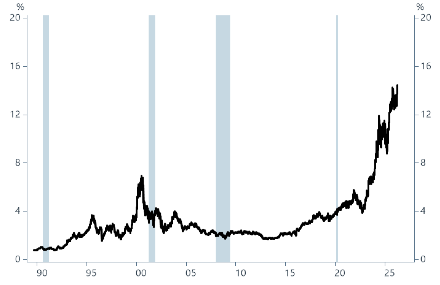
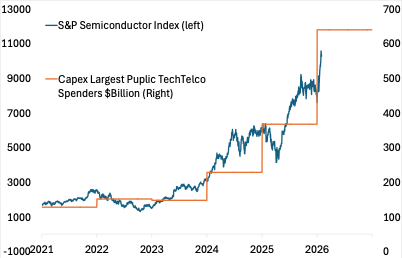
Someday, the chip boom will end, but not today. This past week, press reports spoke of shaky finances at Open AI and about its ability to sustain rapid investment in data centers. But when it came time for the largest four public company spenders to report their spending intentions, they raised their tally by $70 billion for the year to a 70% growth pace, above the 60% pace of the past two years (see figure 4). That’s amazing – and unsustainable.
The incredible rise in AI infrastructure spending powered the S&P semiconductor index to a 74% gain year-to-date. US data centers fill 300 million square feet of commercial space, hosting more than 40% of the world’s data traffic. This portends dramatically higher maintenance spending and upgrades in the future. It also spells much faster depreciation than one sees from electric utilities, for example.
Here Comes the Cliff
Analysts who follow the hyperscalers expect their spending to slow to +15% in 2027 after this year’s 70% increase. This was the same assumption they made a year ago, before this year’s massive leap in spending.
Analysts expect EPS for the semiconductor group to jump 88% this year. While the potential for an upward revision in ’27 chip and data center revenues exists, an outright drop will come someday. The end of the boom will mark a powerful cyclical negative in equity markets. Though semiconductors are a critical long-term growth driver, deep corrections in chip share prices are hardly unusual. Semiconductors and some tech hardware components have risen to a record share of the US equity market, far higher than during the tech bubble peak of the late 1990s (see figure 5).
Managing the next correction in tech hardware will be a challenge requiring careful revisions to our asset allocation work. This year we saw the software sector in a significant correction even as its EPS is expected to rise 13%. That is nothing compared to the hardware cliff that lies ahead at some point.