
Implications of the Attack on Iran
It has been 23 years since the US has undertaken a massive military operation comparable to its attack today on Iran. In 2003, the US and coalition partners invaded Iraq and, during the first three weeks, toppled Saddam Hussein's government. The subsequent dissolution of the Iraqi military and the barring of Ba'ath party members from government left hundreds of thousands of armed men unemployed and resentful. This led to civil war, the rise of ISIS and sustained US involvement through 2011.
The decision to conduct a major attack on Iran opens a new chapter for the US in the Middle East. Today's operations were openly conducted with the Israeli military. And its stated intentions were more than military. In an eight-minute video President Trump said the destruction of Iran's missile programs and nuclear capabilities was paramount. He explicitly called for regime change and the decapitation of leadership.
These goals parallel the toppling of Hussein in 2003 when the obliteration of weapons of mass destruction were the stated purposes for the invasion. The major military difference between the 2003 and 2026 US military actions is the unwillingness of the US to commit ground troops this time.
Retired General David Petraeus, former commander in Iraq and Afghanistan and CIA director, noted that air power alone won't produce regime change. Petraeus said Trump has been "fortunate that major military operations during his second term have not led to significant U.S. troop casualties so far." Petraeus noted it was "remarkable" that neither Israel nor the U.S. had an aircraft malfunction over Iran during last June's 12-Day War, "One failure and somebody punches out over Tehran and all of a sudden you have Americans being dragged through the streets."
Immediate Economic Impacts
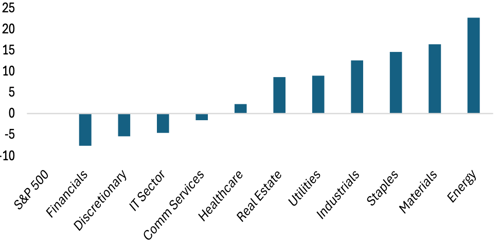
As CIO Group has written recently, the anticipation of a war with Iran had already increased oil prices globally by 15%. Not coincidentally, the US Energy sector has been the performance leader in public markets.
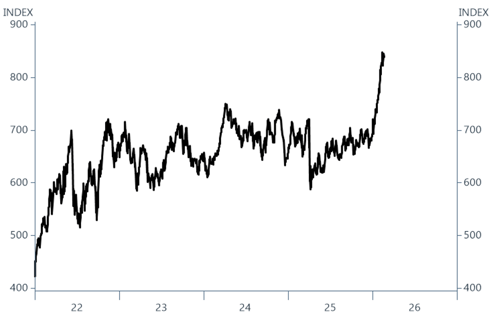
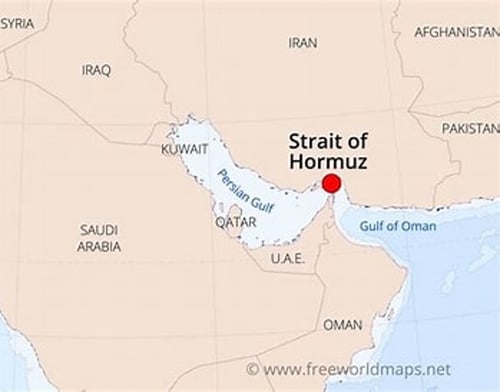
The implications on the global economy are potentially material. Iran produces approximately 3.2 million barrels of oil per day most of which is sold directly to China. Iran also controls access to the Strait of Hormuz, through which roughly 20% of the world's oil supply transits daily.
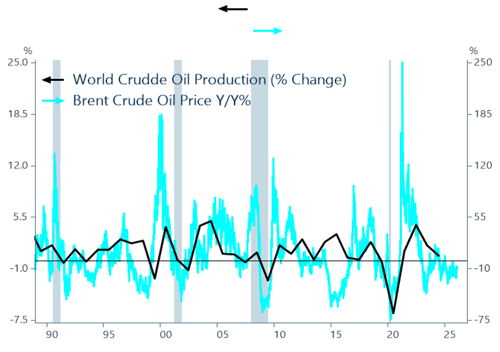
Most investors do not understand the volatility of oil prices. In the short run, oil prices move about 15 times the reduction in production. The world consumes its entire inventory of oil every 35 days, requiring consistent replenishment and shipment across the globe from major producers to consumers.
The immediate market reaction today has been significant. Brent crude, which had already climbed to $73/bbl on February 27 from approximately $65 earlier in the month, is expected to gap sharply higher when Asian markets open.
The critical variable on the direction of oil prices in the near term is the Strait of Hormuz. If passage remains open, the oil price impact — while significant — will be manageable (figure Brent in the $80-95 range). If Iran is able to retaliate by mining or blockading the Strait, even temporarily, prices could spike above $120.
From 2025 until now, OPEC has raised production 6.5% year over year, reversing the supply cuts it made in 2023. Further, US production is at a record high. Both of these factors suggest that the spike in oil and energy shares is likely to be temporary. The wild cards are the length of the closure of the Strait, the ability for the US to ensure safe transit after the air strikes end and the willingness of partners to sustain an increased level of oil production. Markets won't assess all of this until the security situation can be understood.
Uncertainties Multiply, Markets Shudder
While CIO Group will publish separately on the impacts of AI on markets, the number of major issues confronting markets is growing steadily. The war in Iran, ongoing geopolitical tensions between the US and its allies in Europe, continued global tariff uncertainties, domestic political upheaval and the fears associated with the impact of AI on the market leading sectors from 2023-25 are creating growing anxiety among investors.
That anxiety will not diminish when the Administration declares its action in Iran "over". Just as the war in Iraq damaged U.S. credibility when it was confirmed that Iraq did not possess weapons of mass destruction, so too may the US face risks if it cannot deliver on its promise of regime change and instead sees material resistance. A lengthy, costly and disruptive "peace" is not priced into markets.
Given that we expect overall US corporate profits to rise in 2026, we expect markets overall to be up as well. Energy shares will likely rise further along with oil prices, but that's event related. With the shifts underway due to traditional macroeconomic factors as well as new ones rippling through markets due to AI, the need for greater portfolio resiliency is absolutely on our minds.