
The Outlook for 2026 and Beyond


The year behind us saw a predictable rise in global market volatility on the vastly changing macro policies of the new US administration. April saw a near 20% correction in US equities. In 2023, a correction was near 10% before full recovery.  No economic collapse took place in either case.  

The economic costs of US tariffs, retaliation and business uncertainty have been less than feared at the peak of concern in April. Then, it appeared that effective US tariffs would rise 10-fold.  At such a level, the domestic tariff collection alone would have presented the largest tax increase as a share of US GDP since World War II.  Actual tariff collections since imposition point to a 4-fold rise this year, or 0.9% of US GDP, holding down growth and slightly boosting inflation. 

Future tariff uncertainty remains, and negative impacts from retaliation may still raise the impact. Even so, it appears that US economic growth will be near 2.0% in 2025 given its weak start. This is somewhat above Federal Reserve estimates.  On the negative side, corporate earnings have been highly concentrated in AI-linked technology firms and supporting industries.  Barring new shocks, some firming and broadening in profit gains should manifest in 2026.

We believe the larger effects of the US tariffs, immigration restraints and international discord will play out within 2025, leaving just moderate constraint on 2026 as a whole.  Tariffs do not need to be pulled lower for their negative effects to fade.  With global macro policies turning modestly more growth friendly  - including a resumption of Federal Reserve easing steps - we see a strengthening upward bias in the economic growth trajectory for 2026. This is driving strong global equity returns this year, with a positive carry over likely deep into the coming year.

US markets are one beneficiary. China, Europe and their trading partners are others.  It will not be enough to banish growth fears and market volatility. Global growth is unlikely to rise sharply above trend until 2027 at minimum.  Inflation should continue to fade following a ‘’tariff bump,” but with questions of whether the drop will be lasting or sufficient.

Long AI Capital, but Short US Dollar

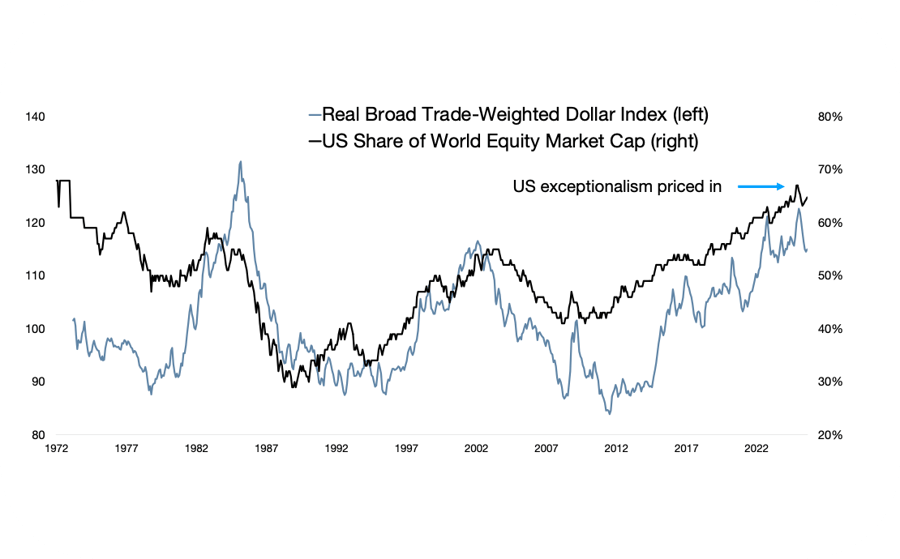
Among the largest questions for investors is the one of international diversification.  Fast and unpredictable change in US policy under the Trump administration has left foreign investors less secure in their view of the US dollar.  We see great risk and opportunity in how this will play out. As figure 8 shows, the US dollar today remains 14% above its long-term average value in inflation adjusted terms.  

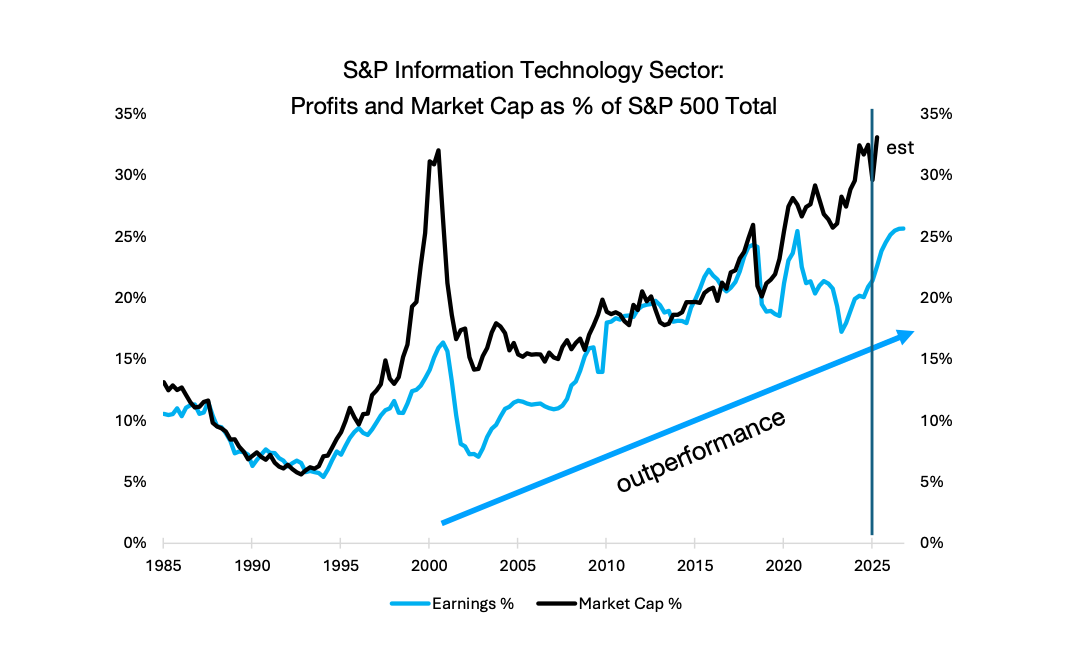
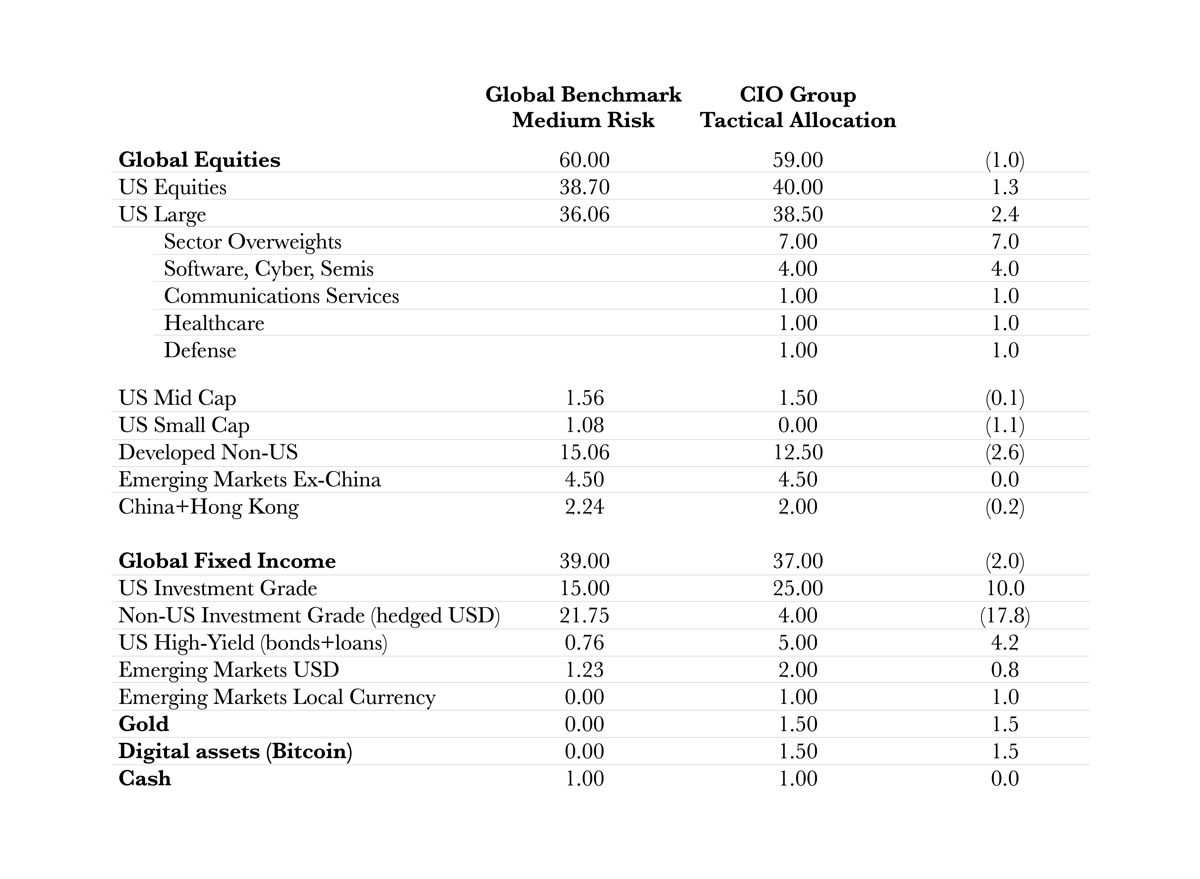
Prior to 2025, US equities outperformed global equities for a record 15 years, setting the stage for improved non-US returns this year. Yet the US is also driving the greatest commercial innovation in technology, particularly AI. We must balance these contrasting risks and opportunities (see figure 9-10). They are not mutually exclusive.


Figure 8 - US Share of Global Equity Market Capitalization (%) And Real, Broad Trade-Weighted Dollar Index
Picture1
Source: CIO Group, MSCI, Federal Reserve

Figure 9 - Secular Rise and Outperformance - With Bubbles and Busts Along the Way
Picture99
Source: CIO Group, MSCI, Federal Reserve

Figure 10 - CIO Group Medium Risk Global Asset Allocation
Picture11


Source: Haver Analytics  CIO Capital Group LLC is an SEC-registered investment adviser. This material is for informational purposes only and does not constitute investment advice or recommendations. All investing involves risk, including potential loss of principal. Forward-looking statements involve risks and uncertainties that could cause actual results to differ materially. Past performance is not indicative of future results. For additional information about CIO Capital Group LLC, see our Form ADV Part 2A at www.adviserinfo.sec.gov.